Showing posts with label elephants. Show all posts

Tuesday, September 27, 2011

Sri Lanka is Not India’s Little Sister

Continuing on my travels, I made a quick weekend trip to Sri Lanka. I should have done a little more research before leaving; I had very little idea of what to do there other than visiting an elephant orphanage, seeing some beautiful scenery, and their ancient cities. I’ll admit that I also kind of thought of Sri Lanka as a close relative of India, being so geographically close must result in some similarities right? Although there are a few similarities, Sri Lanka is entirely different to me than India. I am growing more and more fond of India, but I really loved Sri Lanka (and not because it’s not like India.) Anyway I leave Mumbai on my 3AM flight and arrive in Sri Lanka to meet my friend at a hotel in Negombo. We pass out for another six hours before deciding to go to the elephant orphanage. Our limited research told us to hire a driver for the day, and we had to make it to Kandy as we had a bed and breakfast reservation there. The driver would take us to the elephant orphanage and tea plantation on the way to Kandy. Well it turns out Sri Lanka does not have any highways, the first one is opening soon, so to travel the 114 km (65 miles) to Kandy would take about 3.5 hours as the road is two lanes and passes through all the cities on the way to Kandy. Wow, ok. So we set out to see some baby elephants. On the way there our driver pointed out prominent landmarks and we learned really interesting facts about Sri Lanka. I did feel bad for our driver as my friend and I did not cease conversation for the entire duration of the drive, but we had a good time! One of the best parts of the trip was the driver; he was very nice, personable, and great to have conversations with. We hung with some elephants, took a bath with them, fed them, and got fed ourselves with some really delicious fried rice and coconut dal. We were late for the tea plantation, but we stopped by an herbal garden before climbing our way up a hill to our bed and breakfast. The view was incredible. The couple who owned the house was so nice and made some really great food for us. We talked a little with an Australian couple who was staying there and finishing up their week in Kandy and then passed out.

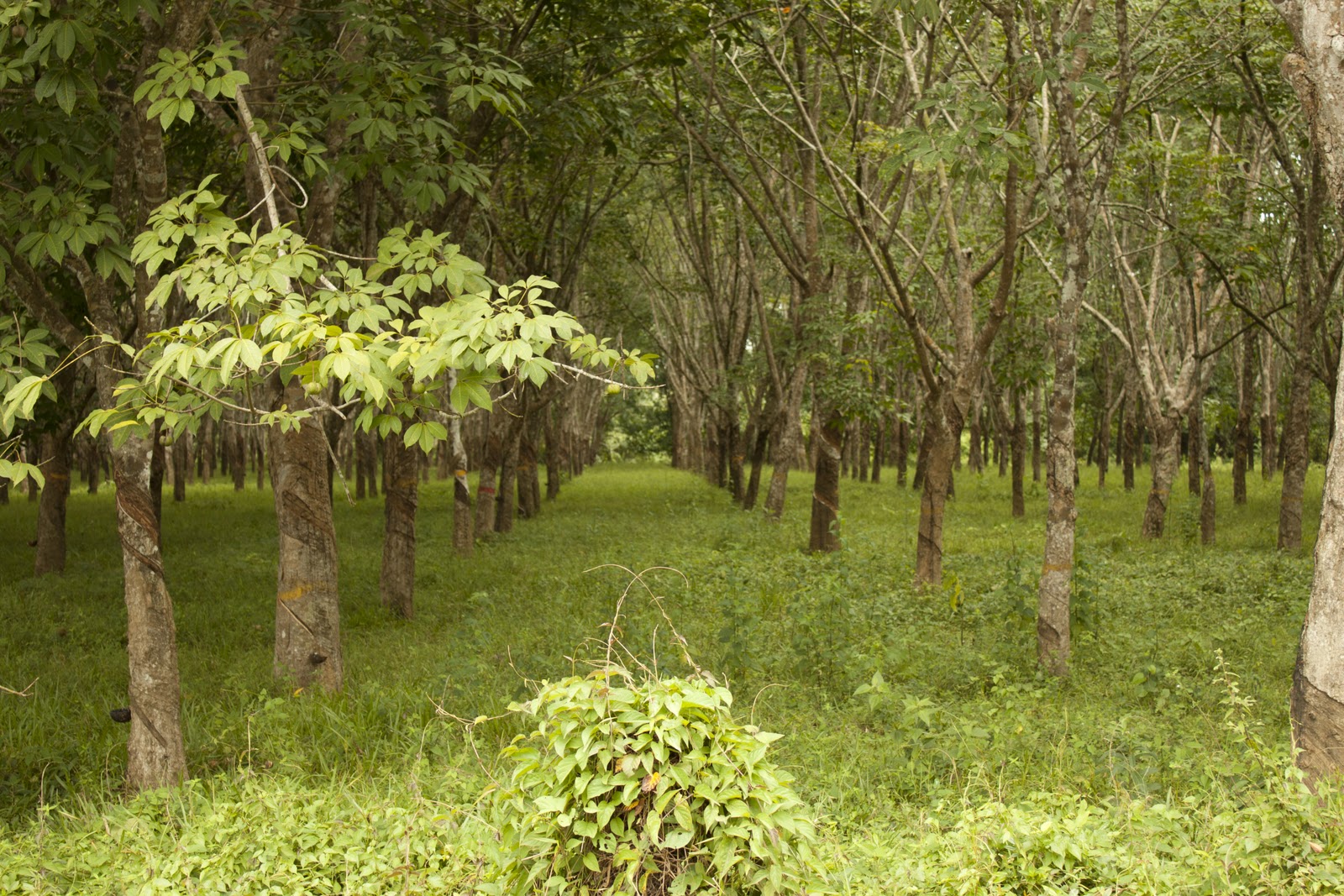
On the way to Kandy our driver pulled over and showed us this rubber plantation. There are little coconut shells at the bottom of the trees that collect the latex. 

Getting sprayed by the elephant. I got soaked.

Sitting on the bed looking out toward the beautiful view...
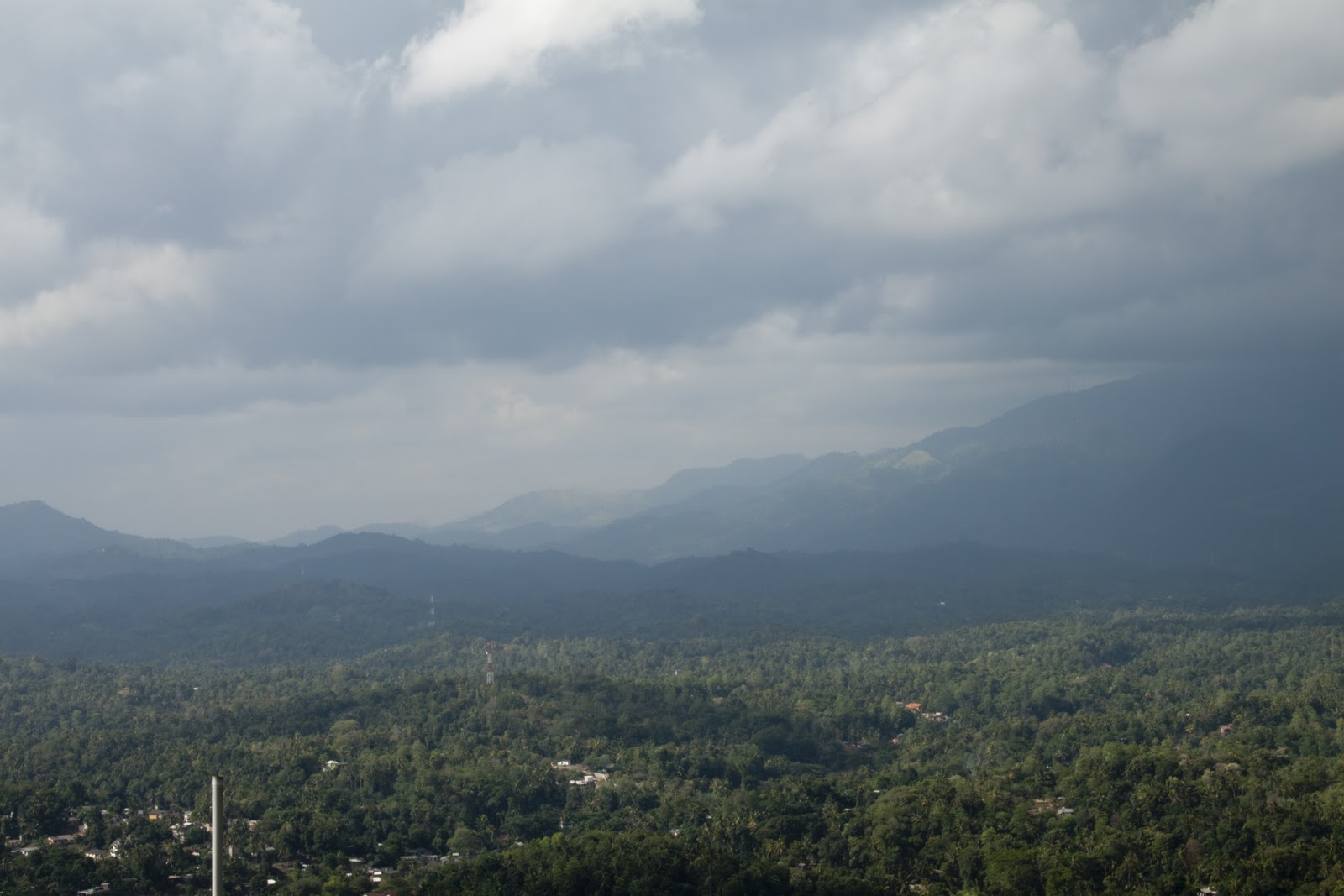
...which was this.

The next morning we went to see the Temple of the Tooth, a Buddhist temple with one of Buddha’s teeth as a relic. After touring the temple with the crowd of Buddhists, we got some KFC and decide to start our journey back to Negombo as my flight was later that night. It was much too short of a trip; my friend stayed an extra day and got to see newborn sea turtles! I would love to go back to Sri Lanka for a week and really take in all the sights. The country is so green and beautiful, I felt so at peace and serene whether I was in Kandy, Negombo, or just on the road. The people are so nice and accommodating, and very genuine. I guess here is the time to explain why these appeal to me so much. There are parts of India that are absolutely stunning, but the urbanization and the heaps of trash sometimes give a gloomy, and smelly, air that really takes away from the country’s natural beauty. Our driver told us that Sri Lanka went through a very extensive public campaign to clean up public areas and it really was cleaner than parts of Europe I have been to. I think that really lets you focus on the serenity and natural charm of the country. The second is that people in India have an unexplained fascination with foreigners. This translates into staring and being talked to as a novelty, especially an Asian-American! It’s all harmless and comes from genuine curiosity, but it can get demoralizing and uncomfortable. I didn’t get that in Sri Lanka, maybe because I was a real tourist and spent time with people who are used to seeing tourists, but it was refreshing to have insightful conversations that weren’t focused on why I look the way I do or what I’m doing there. All in all, I thoroughly enjoyed my Sri Lankan experience and only wish I could have spent more time there.
 The beautiful flowers that are offered to Buddha, you can see some of the lotus flowers. These are later the meals for the temple elephant.

At the Colombo airport (which is actually in Negombo) where apparently clergy are VIPs.

Wednesday, September 14, 2011

Ganesh Chaturthi

One of the festivals I was looking forward to experiencing while in India was Ganesh Chaturthi. Because I am so close to Mumbai, I was excited that I would get to witness this great celebration. I’ll be honest and admit my initial interest was sparked by Shantaram, but is that so bad? Anyway Ganesh Chaturthi is the Hindu festival of Ganesha, who bestows his presence for all his devotees on earth during the festival. He is the god of wisdom, prosperity and good fortune, and was declared by Shiva as superior to all the other gods. Shiva is Ganesha’s father and one of the most prominent deities in Hinduism. Artisans make models of Ganesha and sell these two to three months before Ganesh Chaturthi. These are then installed in homes and public places. The public ones are larger and beautifully decorated, with communities competing for the most beautiful and biggest statue. Priests then invoke the statues to life through mantras and then the statues receive offerings. For ten days Ganesha is worshipped, on the eleventh day the public statues are carried through the streets in a procession with singing and dancing. Then they are submerged in water as seeing off Ganesha to his home in Kailash and taking the misfortunes of his devotees with him. The family Ganeshas are taken to the water on the third, fifth, or seventh day depending on the family tradition. It’s a huge event for the communities as well as artists and businesses that depend on the economic success of Ganesh Chaturthi.

There is a lake in the city I work and live in, and one of my co-workers offered to take me on the seventh day to see the processions and the submersions family Ganesha to the lake. She happened to live by the lake and had a motorbike so I hopped on and was excited for the adventure. There is a lot of fanfare for each procession! We were stopped in traffic from about a half mile from her house as the processions took up the whole street and were moving forward at a slow walking pace. On the way she took me to two of the public Ganeshas and they were beautifully and extravagantly decorated. The families themselves did not submerge Ganesha, but there were volunteer divers who would take the small Ganesha to the lake and immerse it. There was also police monitoring the procession route and the area near the lake, I guess because people can get a little rowdy? 

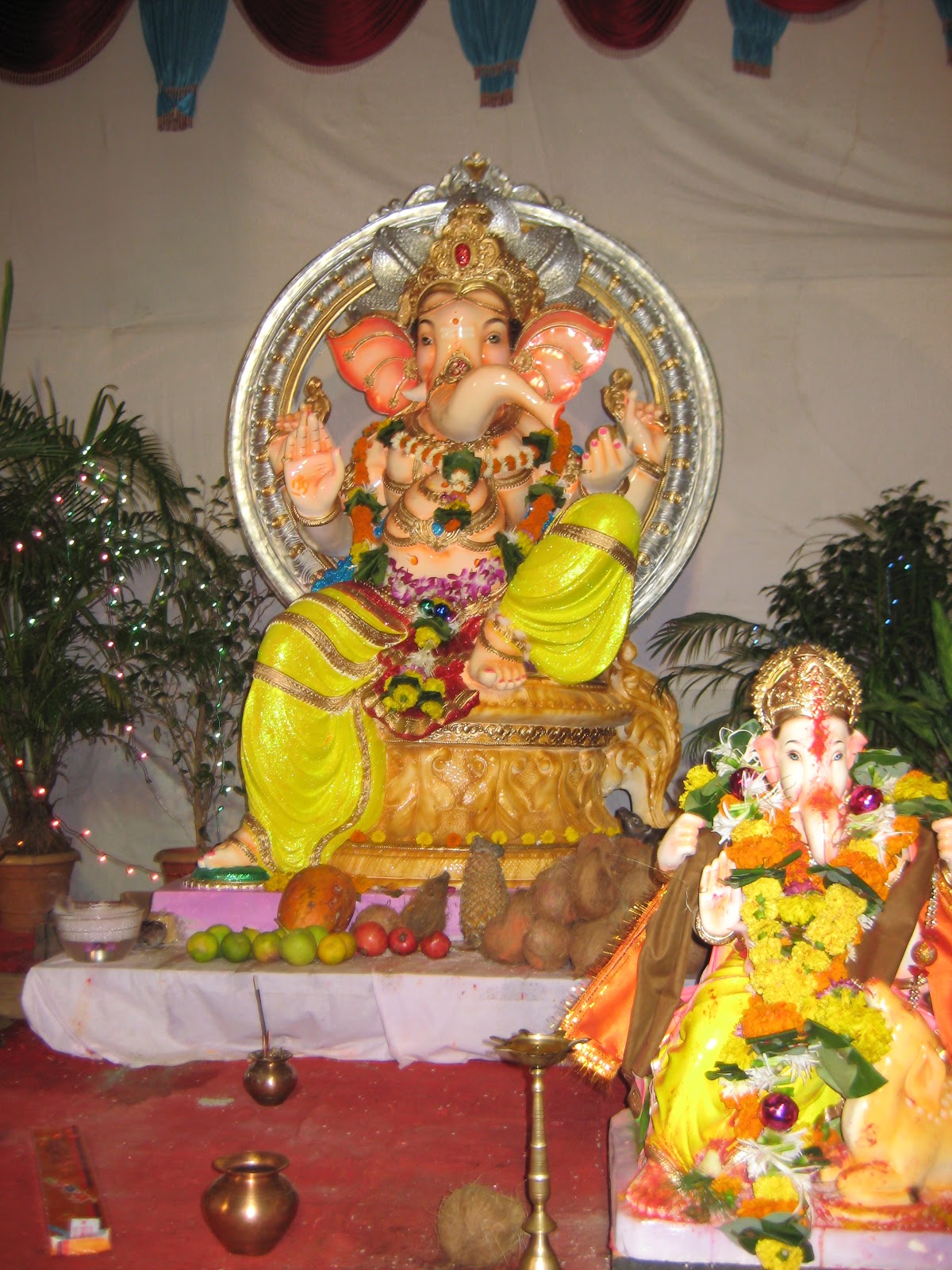
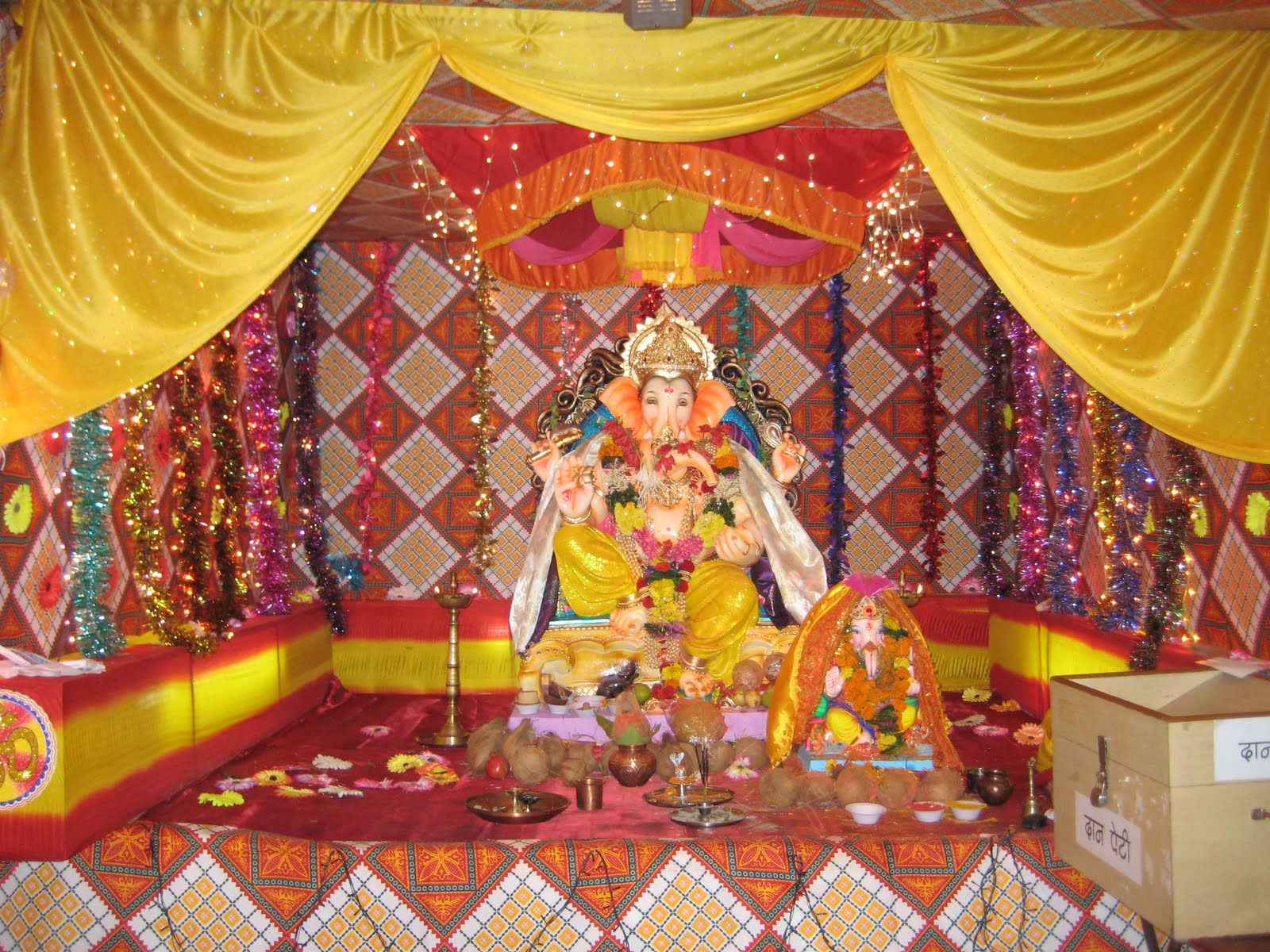
One public Ganesha on the way to my co-worker's house.

The public Ganesha at my co-worker's building.

One of the many processions we encountered. We are driving on the wrong side of the road to bypass it.

Now you see it, now you don't!

Friday, April 22, 2011

Diversity and Inclusion

India is extremely diverse, an obvious point but a significant factor that affects every aspect of life. I had a great conversation today with one of the directors from the Mumbai office about the diversity of India and its future economic prospects. With such a large population and as a growing economic power, there are high expectations about the societal and economic future of India. With more than 18 official languages and many more unofficial languages, different ethnic groups, different religions, and the pressure of ‘modernization,’ India faces a truly daunting task. There are more than 30 bank holidays, because there is a bank holiday for every religious and national holiday in India. This means every Hindu, Buddhist, Christian, Jain, Sikh, etc holiday is observed. How so very inclusive! Then there are the languages, sometimes mistakenly referred to as dialects. There is a distinct language in each of state India; it was one of the factors when dividing India into its present states. So school children learn subjects in their native language until first grade, and then start learning Hindi and English. However the unfortunate children who are uneducated often do not get a chance to learn Hindi and English. When you call Customer Service there are multiple language options. Then there are different ethnic groups. Often times this diversity is found within a state. So to have true unity and face the 21st century, the people within each state must unify and the states must unify. Otherwise you have a very splintered country which lacks the focus in order to maximize on its vast potential.

Then there are differing views on the best path forward to economic growth. Mostly accepted now is the Western model of industrialization. Gandhi had advocated a republic of self-sufficient villages. A great illustration of the tension between tradition v. ‘modernization.’ In my research of state youth policies, there is an urgency in ensuring that traditional arts and culture are not forgotten. There is a sense of cultural pride that people have, and it has resulted in India painting its own version of modernization. I am curious to see how this will continue in the future. My theory is that since India has such a dominant popular culture of its own, with Bollywood and the accompanying music videos, that Western cultural influences will not be as significant. In other countries I've visited, American culture has been supremely dominant. In France American films were dubbed in French. The movie theaters here have Hindi movies, maybe one American movie. In other countries I hear about Brad Pitt or Julia Roberts. Here I hear about SRK, Kareena Kapoor, Aamir Khan, among others. Sometimes I would feel like American culture was encroaching on other countries' pop cultures, and sometimes I could feel an undercurrent of tension from the people. In India, popular culture is very independent and has acted as a great buffer to outside influences.

And then there’s China. There is much talk about China in the US, but I’ve never heard so much about China as I have here. I’ve seen posters that compare Indian and Chinese statistics on workforce, growth, and overall renown. As a fellow BRIC country, India is very aware of the comparisons being made between China and India and seems eager to prove their significance. They want to make sure India is on the map as China is. I have to agree that in my general conversations in the US, people would talk more about the influence that China is gaining. You would hear about the importance of learning Mandarin. I didn't hear as much about India or learning Hindi. However looking at the numbers, India has made huge strides in the past several years and can be the dark horse in this 'competition.' I think the realization of this potential will again lie in India’s ability to synthesize a wildly diverse country.

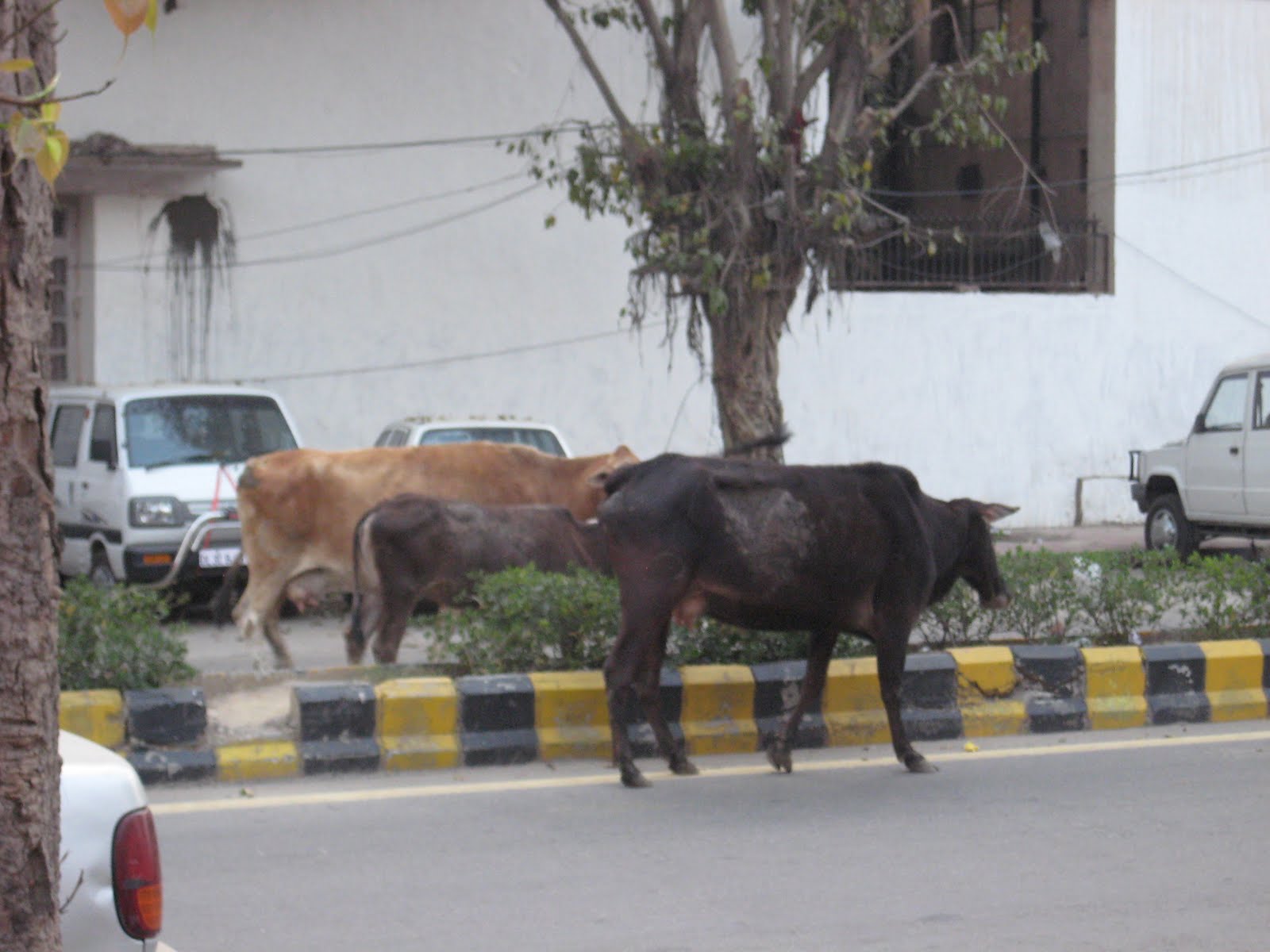
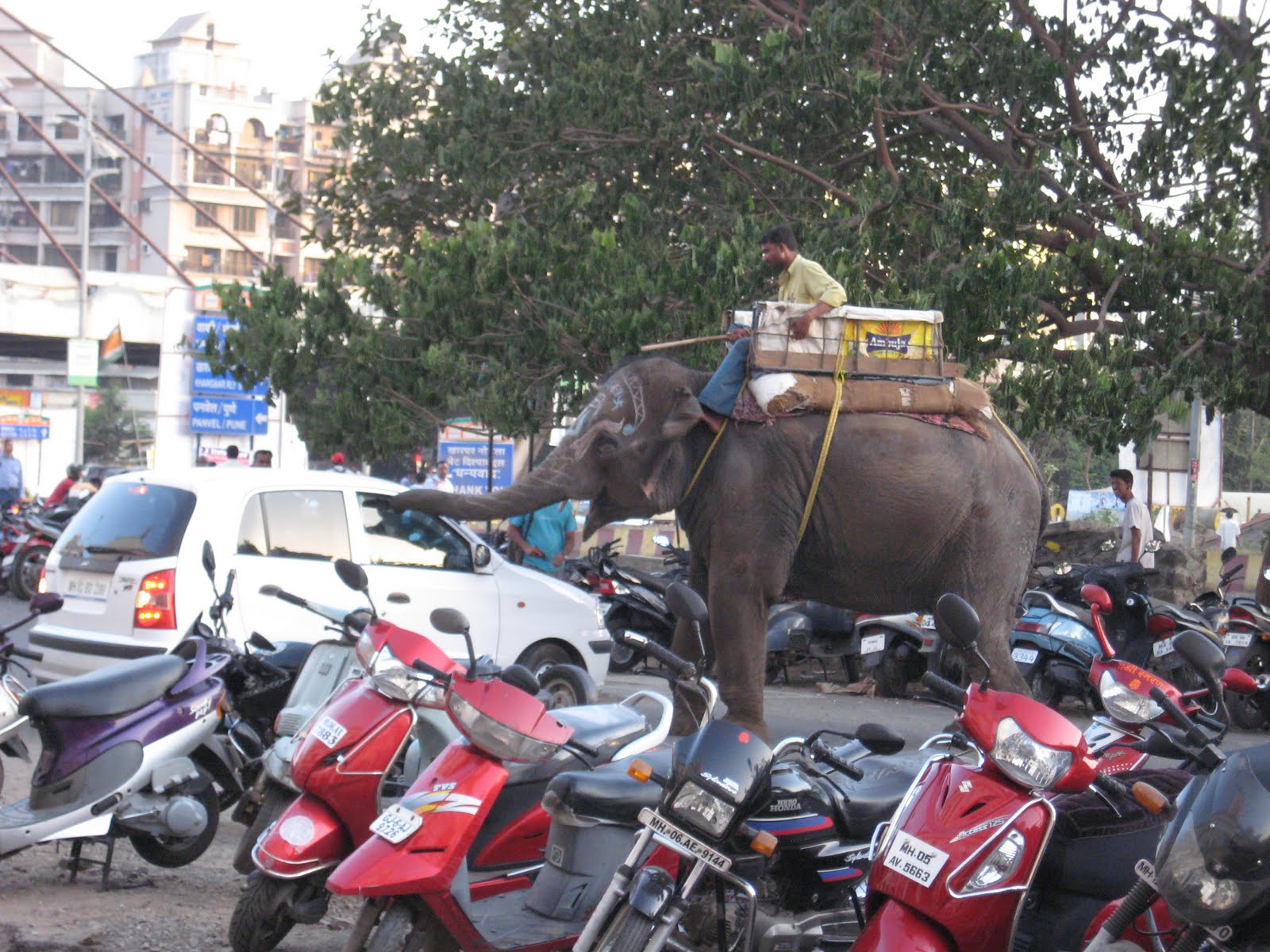
But India is a magical place. There really is no other place like it; it’s a different level of existence. A harmonious mix of contradictions. Frenetic sensory overload but life at a slower pace. Embracing Western models of growth but applying them to traditional industries. Then there are the cows and elephants that roam around the streets. That get fed from cars in parking lots.